Instrument making
Harpsichords
Keyboard instrument with plucked strings, in use from the 16th to the 18th century.
Each key raises a jack; the plectrum, set in the tongue, plucks the string on the way up. When the key is released the jack falls, the tongue pivots so the plectrum passes the string without plucking again, and the felt damper stops the vibration.
The workshop builds single- and double-manual harpsichords after the Flemish, French and Italian schools, with the disposition, compass and pitch the player requires.
Technical data
| Action | Jacks with quill or polymer plectra |
|---|---|
| Manuals | 1 or 2 |
| Disposition | 8' · 4' · 8' 8' 4' · buff stop |
| Compass | 4 to 5 octaves (e.g. GG–d''' or FF–f''') |
| Pitch | 392, 415 or 440 Hz |
| Temperaments | Meantone, Werckmeister III, Vallotti, equal |
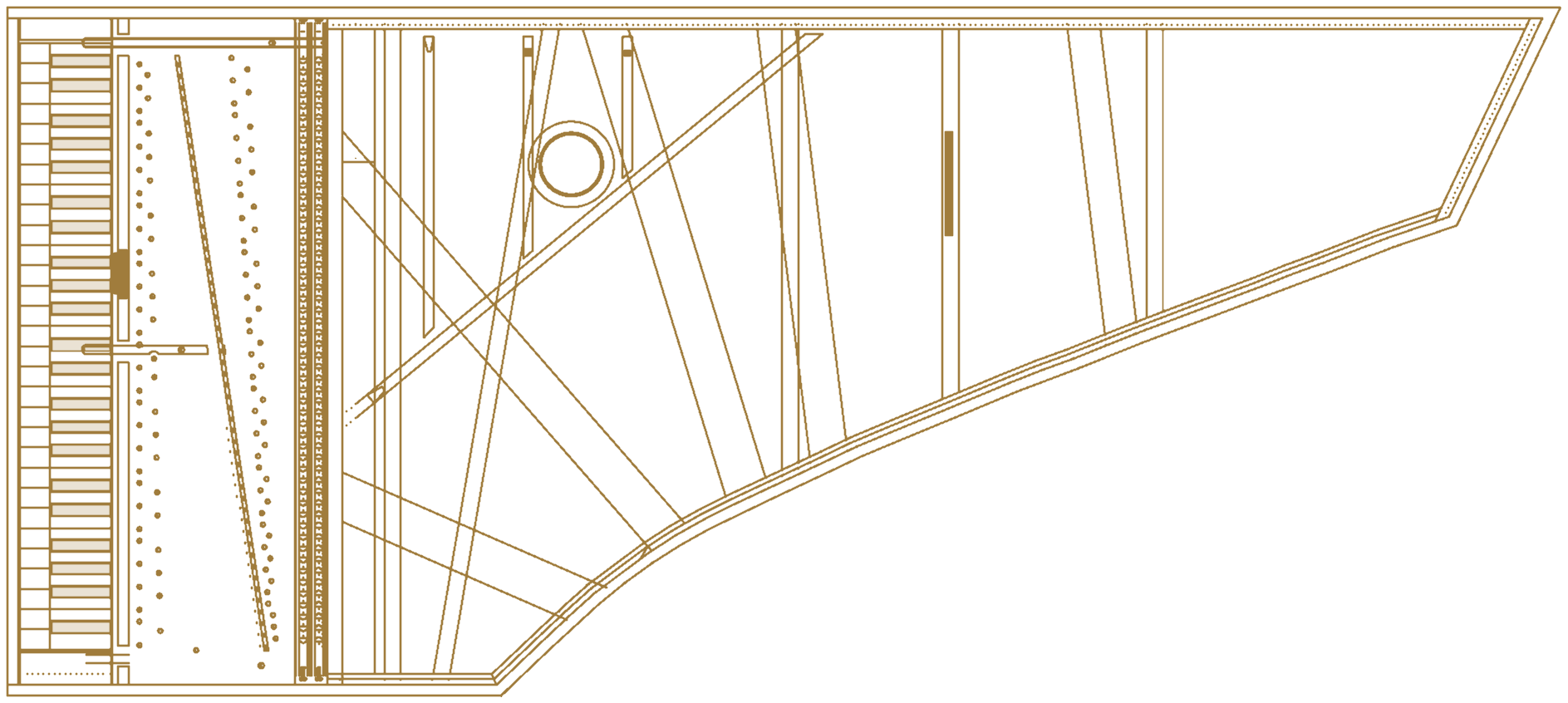
Plan of a Flemish harpsichord
Instruments from the workshop
Enquiries